Serving Northern VA & MD


Beacon Home Services | Plumbing & Electrical
Hard Water Damage: Is It Time to Replace Your Water Heater in Montgomery County?

4.9 Google Rating

Your water heater may still be producing hot water, but that does not mean it is operating the way it should. If the tank has started rumbling, recovery takes longer, or you are noticing signs of mineral buildup, hard water may be part of the problem.
Over time, hard water can contribute to scale and sediment inside a traditional tank water heater. That buildup can affect performance, but it does not automatically mean the system needs replacement.
In this guide, we’ll explain how hard water can affect your water heater, which warning signs deserve attention, when flushing or repair may still make sense, and when replacement becomes the more practical option. The goal is to help Montgomery County homeowners decide based on the system’s condition rather than age or noise alone.
How Does Hard Water Affect a Water Heater?
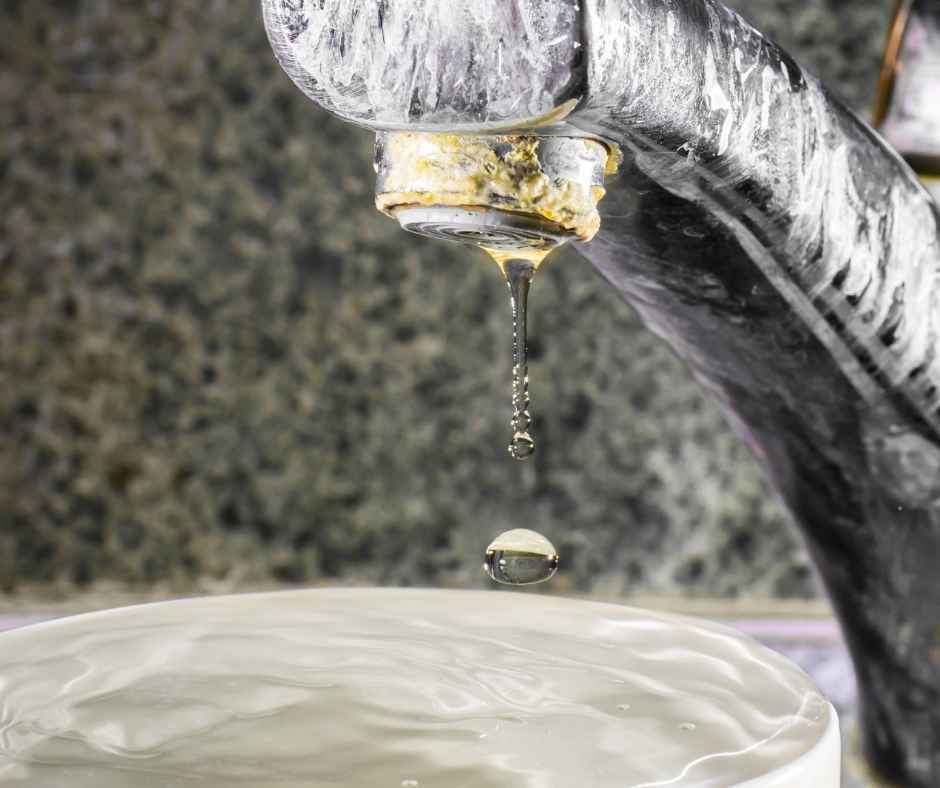
Hard water contains dissolved minerals that can leave deposits behind as water is heated. Over time, those minerals can collect as scale on components or settle as sediment near the bottom of a storage tank.
That buildup can interfere with normal operation in several ways. It may reduce heat transfer, cut usable tank capacity, and cause unusual noises or longer recovery times.
Possible effects include:
- Popping or rumbling sounds
- Reduced hot water availability
- Longer heating cycles
- Mineral scale around components
- Declining performance
- More frequent maintenance needs
Hard water doesn’t guarantee a water heater will fail early. It does make maintenance and overall system condition more important when deciding how long to keep the equipment.
What Are the Signs of Hard Water Damage in a Water Heater?
Hard water damage is usually identified through a combination of symptoms rather than one single sign. Some problems can also come from unrelated water heater issues, so diagnosis matters.
Watch for:
- Popping, crackling, or rumbling
- Reduced hot water capacity
- Longer recovery times
- Visible mineral deposits
- Increasingly inconsistent performance
- Repeated sediment-related maintenance
- Corrosion around certain components
- Declining efficiency
One noisy heating cycle does not prove the tank is full of sediment. If several of these symptoms appear together, especially on an older water heater, it is worth having the system evaluated.
Why Is Your Water Heater Popping or Rumbling?
Popping and rumbling are commonly associated with sediment buildup in storage water heaters. Water can become trapped beneath or around deposits and create noise as it heats and moves through the sediment.
The sound can become more noticeable as buildup increases. However, volume alone does not tell you whether the tank needs replacement.
A noisy water heater may still be serviceable with appropriate maintenance. The better question is whether the noise is accompanied by other issues such as leakage, corrosion, declining hot water capacity, or repeated repairs.
Can Hard Water Make You Run Out of Hot Water Faster?
Yes, sediment buildup can reduce the amount of usable water inside the tank. If enough material settles at the bottom, the system may effectively have less capacity than it did when it was new.
Hard water can also affect heating performance by building up around surfaces where heat transfers. That can contribute to longer recovery times or make the system seem less responsive.
Other causes of reduced hot water include:
- Thermostat problems
- Heating element issues
- Burner problems
- Increased household demand
- Undersized equipment
- General equipment deterioration
That is why you should diagnose reduced hot water before assuming hard water is the only cause.
Can Flushing Remove Hard Water Sediment?
Flushing can help remove loose sediment from some traditional tank water heaters. How effective it is depends on the amount of buildup, tank age, maintenance history, and overall condition.
A regularly maintained tank may respond well to flushing. A neglected older tank with hardened sediment may not improve as much, and flushing cannot reverse corrosion or structural deterioration.
Factors to consider include:
- Water heater age
- Tank condition
- Previous maintenance
- Severity of buildup
- Presence of leaks
- Corrosion
- Manufacturer recommendations
Flushing is a maintenance tool, not a universal repair. If the tank itself is deteriorating, sediment removal alone will not solve the bigger problem.
When Is Water Heater Repair Still Worth It?
Repair can still make sense when the tank is in good condition and the current problem is isolated. An older water heater doesn’t automatically need replacement just because it needs service.
Repair may be reasonable when:
- The tank is not leaking
- Significant corrosion is not present
- The issue involves a serviceable component
- The system has otherwise been reliable
- Hot water capacity remains adequate
- Repairs have not become frequent
- The repair cost makes sense for the equipment’s condition
One repair on an otherwise dependable system differs greatly from a pattern of recurring breakdowns. Repair history should factor into the decision.
When Does Hard Water Damage Make Replacement More Practical?
Replacement becomes more compelling when hard-water-related issues are only one part of broader equipment deterioration. The more problems that appear together, the harder it becomes to justify continued repair.
Replacement may make more sense when:
- The tank itself is leaking
- Corrosion is significant
- Sediment buildup is severe
- Hot water capacity keeps declining
- Repairs are becoming frequent
- The system is making persistent noise
- Major components are failing
- The water heater is already aging and unreliable
Base the decision on the entire system, not just the presence of mineral buildup. A heavily deteriorated tank with repeated problems is different from a healthy unit that simply needs maintenance.
Does a Leaking Water Heater Always Need Replacement?
Not always, because the leak source matters. Water can sometimes come from a fitting, valve, connection, or nearby plumbing rather than the tank itself.
A leaking storage tank is more serious. Once the tank has corroded enough to leak, repair options are much more limited and replacement is usually the more practical path.
If you find water around the unit:
- Do not assume the source
- Avoid contact with electrical components
- Watch for active leakage
- Do not attempt to open or disassemble the tank
- Call for professional evaluation
A plumber can determine whether the problem is repairable or whether the tank has reached the point where replacement makes more sense.
Should You Replace a Water Heater Before It Fails Completely?
Sometimes, especially when there is already clear evidence that the system is deteriorating. Planned replacement gives you more time to compare options and avoid making a rushed decision after a sudden loss of hot water.
It may be worth considering replacement before complete failure when:
- The tank is corroded
- Leaks have started
- Repairs are increasing
- Performance is declining
- Hot water capacity is no longer adequate
- The system is clearly nearing the end of useful service
That does not mean every older water heater should be replaced preemptively. A reliable unit in good condition may still have useful service life left.
Should You Consider Tankless When Replacing a Water Heater?
Replacement is also a chance to compare traditional storage and tankless systems. Tankless water heaters do not store a large volume of hot water, which changes how sediment accumulation affects the equipment.
That does not mean tankless systems are immune to hard-water problems. Mineral scale can still develop inside heat exchangers and may require regular descaling or other maintenance.
Tankless suitability depends on:
- Household hot water demand
- Gas supply
- Electrical capacity
- Venting
- Plumbing configuration
- Installation space
- Budget
- Maintenance expectations
The right option depends on the home and household, not just the desire to avoid a tank.
Can Water Treatment Help Protect a New Water Heater?
Water treatment may help in homes where mineral content is contributing to scale throughout the plumbing system. The right solution should be based on actual water conditions, not assumptions that every Montgomery County home needs the same equipment.
Depending on the situation, homeowners may consider:
- Water softening
- Water conditioning
- Scale-reduction systems
- Other treatment options
Treatment can help reduce certain mineral-related problems, but it is not a substitute for water heater maintenance. A new system still needs to be installed, operated, and maintained correctly.
What Should You Consider When Choosing a Replacement Water Heater?
Choose a replacement water heater based on your household’s actual needs. Simply buying the same size as the old unit may not always be the best choice.
Important factors include:
- Household size
- Peak hot water demand
- Number of bathrooms
- Fuel type
- Electrical capacity
- Installation space
- Venting
- Tank or tankless preference
- Efficiency goals
- Water conditions
- Future household needs
A properly selected system is more likely to provide consistent hot water and avoid the comfort problems that can come from undersized or poorly matched equipment.
Get the Right Water Heater Solution With Beacon Home Services
Hard water can contribute to sediment, scale, noise, and declining performance, but it does not automatically mean your water heater needs replacement. The smarter decision comes from looking at the tank condition, repair history, age, hot water capacity, and whether the system is leaking or deteriorating.
Beacon Home Services can evaluate your water heater, identify whether hard water or sediment is contributing to the problem, and help you determine whether maintenance, repair, or replacement makes the most sense. If your Montgomery County water heater is getting louder, less reliable, or harder to maintain, contact us today to schedule professional water heater service.