Serving Northern VA & MD


Beacon Home Services | Plumbing & Electrical
Tree Roots and Sewer Line Problems in Rockville Neighborhoods

4.9 Google Rating

Mature trees add shade, character, and curb appeal to many Rockville neighborhoods, but their root systems can create serious problems when underground sewer lines are already cracked, separated, or deteriorating. Once roots find moisture inside a damaged pipe, they can grow into the opening, restrict wastewater flow, and contribute to recurring backups.
In this guide, you will learn how tree roots enter sewer lines, which warning signs to watch for, and when cleaning, repair, or replacement may be necessary. Acting early can help protect your home from sewage backups, water damage, and more extensive pipe deterioration.
Can Tree Roots Damage a Home’s Sewer Line?
Tree roots can enter a sewer line through cracks, loose joints, damaged seals, and other existing openings. Once inside, the roots continue growing toward water and nutrients, creating a dense obstruction that can slow or block wastewater.
Root intrusion is more likely when a sewer line has:
- Cracked or deteriorated pipe walls
- Separated pipe joints
- Loose connections
- Previous damage or repairs
- Older pipe materials
- Trees growing near the sewer route
A healthy, properly sealed pipe is generally more resistant to root intrusion. In many cases, the roots take advantage of an existing defect rather than causing the original opening.
Why Do Tree Roots Grow Into Sewer Lines?
Tree roots naturally search for water, oxygen, and nutrients. A leaking or damaged sewer pipe can release small amounts of moisture into the surrounding soil, attracting nearby roots.
Very small roots may enter through narrow cracks or loose joints. Once they reach the inside of the pipe, the steady supply of water allows them to expand. Waste, grease, paper, and other debris can then collect around the roots, worsening the blockage.
Root growth may begin as a minor restriction, but it can become more serious over time. As roots thicken, they can place pressure on weakened joints and pipe walls. This may contribute to larger cracks, displaced connections, or partial collapse.
The location and condition of the pipe matter as much as the type of tree. A large tree close to an older sewer lateral may create a higher risk, but even smaller plants can cause problems when their roots find an accessible opening.
Which Rockville Homes Are More Likely to Have Root Intrusion?
Any home with a damaged sewer line can develop root intrusion, but certain conditions increase the risk.
Rockville homeowners should pay closer attention when their property has:
- Mature trees near the route of the sewer line
- Older clay, cast iron, concrete, or Orangeburg piping
- A history of sewer repairs or recurring clogs
- Large shrubs planted close to underground plumbing
- Low spots or soil settlement near the sewer route
- Sewer lines with multiple joints
- Pipes that have shifted because of ground movement
- Previous root removal without structural repair
Older neighborhoods may have sewer lines that have been in place for decades. Age alone does not prove that a pipe has failed, but older materials and joints may be more vulnerable to cracking, corrosion, and separation.
Newer homes can also experience sewer problems. Improper installation, soil movement, construction damage, or poorly connected pipe sections can create openings that allow roots to enter.
What Are the Signs of Tree Roots in a Sewer Line?
Root intrusion often produces the same symptoms as other main sewer line problems. The warning signs may begin gradually and become more frequent as the obstruction grows.
Common signs include:
- Several drains slowing at the same time
- Toilets gurgling after a sink, shower, or washing machine drains
- Water backing up into a tub, shower, or floor drain
- Sewage odors inside the home
- Recurring clogs after previous drain cleaning
- Toilets that flush poorly or need repeated plunging
- Unusual wet areas in the yard
- Grass that appears greener over part of the sewer route
- Plumbing problems that return despite normal fixture use
A single slow sink is often caused by a localized clog near that fixture. When multiple drains are affected, the problem may be deeper in the main sewer line.
Recurring clogs are particularly important. If the line is cleared and the same symptoms return, roots may be growing back through an unrepaired crack or separated joint.
A sewage backup requires prompt attention. Avoid using water throughout the home until you identify the cause, since additional wastewater may increase the damage.
How Can a Plumber Confirm That Roots Are in the Sewer Line?
Symptoms alone cannot prove that roots are causing the problem. Grease, foreign objects, pipe collapse, corrosion, poor slope, and other defects can create similar signs.
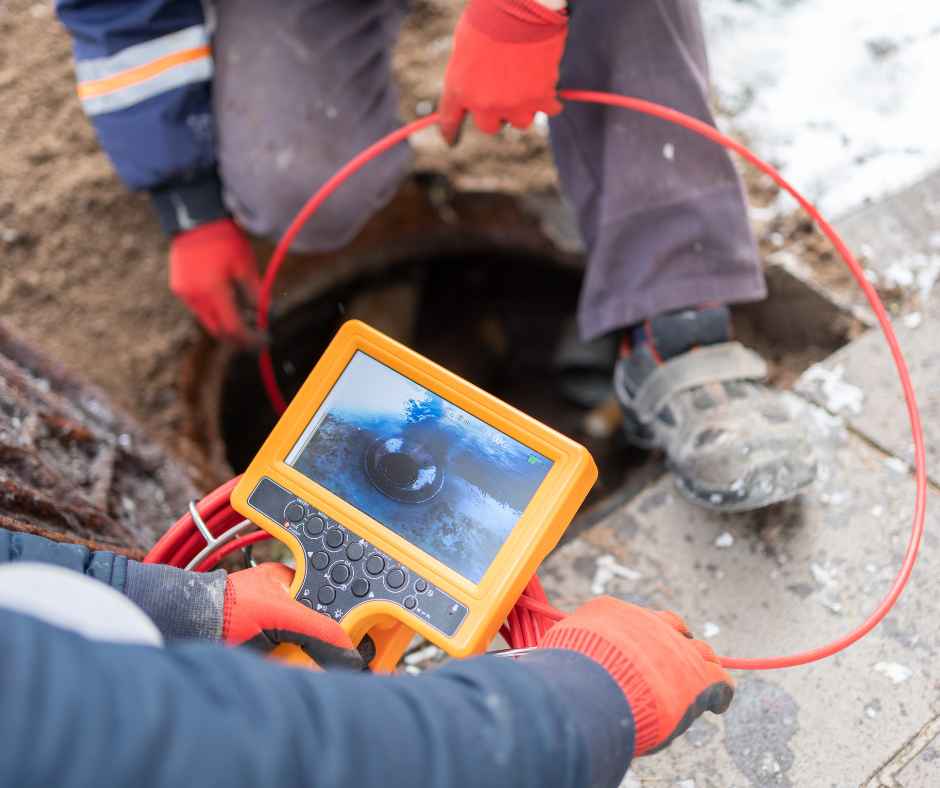
A sewer camera inspection lets a plumber see inside the line. A small waterproof camera is inserted through an accessible cleanout or another entry point and moved through the pipe.
The inspection may reveal:
- Root growth inside the line
- Cracks or holes
- Separated or offset joints
- Corrosion
- Standing water
- Debris buildup
- A sagging section of pipe
- Partial or complete collapse
The camera can also help determine where the problem is located and how much of the pipe is affected. This information is important when comparing cleaning, spot repair, lining, or replacement.
The line may need to be cleared before the camera can pass through a heavy obstruction. In that situation, a follow-up inspection can reveal the condition of the pipe after the roots and debris have been removed.
Can Tree Roots Be Removed Without Replacing the Pipe?
Roots can often be cut or cleared from a sewer line to restore wastewater flow. The appropriate method depends on the pipe material, the severity of the obstruction, and the line’s structural condition.
A plumber may use mechanical cutting equipment to break through root growth. Other drain-clearing methods may be appropriate when the pipe can safely withstand them.
Clearing the roots may provide immediate relief, but it does not repair the opening that allowed the roots to enter. If the pipe remains cracked or separated, new growth can return.
Homeowners should ask these questions after root removal:
- What defect allowed the roots into the line?
- Is the pipe still structurally sound?
- How severe is the cracking or separation?
- Is the problem limited to one section?
- How likely are the roots to return?
- Is repair recommended now or later?
- Should the line be inspected again after cleaning?
Repeatedly clearing the same line without addressing structural damage can lead to ongoing service costs and an increased risk of backup.
Chemical root treatments are not a substitute for diagnosis. Products may not reach the affected area evenly, and some may be inappropriate for certain plumbing systems or local wastewater requirements. Professional inspection should come first.
When Does a Root-Damaged Sewer Line Need Repair or Replacement?
Cleaning may be enough when root growth is limited and the pipe remains in good structural condition. Repair becomes more likely when the camera inspection shows damage that will continue allowing roots inside.
Repair or replacement may be recommended when:
- The pipe has large cracks
- Joints are severely separated
- A section has collapsed
- Root intrusion returns frequently
- The pipe is badly corroded
- Multiple sections are deteriorated
- Wastewater cannot flow at the proper slope
- Previous repairs have failed
- The line is close to complete blockage
A localized defect may be addressed with a spot repair. More extensive deterioration may require a longer section of pipe to be replaced.
Depending on the condition and layout of the line, trenchless repair methods may sometimes reduce the amount of excavation required. Traditional excavation may still be necessary when the pipe has collapsed, shifted significantly, or cannot support a lining method.
The best option should be based on the inspection findings, the pipe material, accessibility, repair length, property layout, and long-term reliability.
How Can Rockville Homeowners Reduce Future Root Problems?
Preventing root intrusion starts with keeping the sewer line structurally sound. Roots are less likely to enter a pipe that has no leaks, cracks, or open joints.
Helpful preventive steps include:
- Schedule an inspection when clogs repeatedly return
- Repair known cracks and separated joints
- Keep records of previous sewer work
- Learn the approximate route of the sewer line
- Avoid planting large trees directly over underground plumbing
- Monitor mature trees near the line
- Address wet spots or unusual yard changes
- Avoid flushing wipes, grease, and other clog-forming materials
- Follow recommended maintenance after root removal
- Consider a sewer inspection before purchasing an older home
Tree removal is not always necessary. The first priority is identifying the location and condition of the sewer pipe. Removing a tree without repairing the damaged line may not solve the plumbing problem, since remaining roots or roots from other plants can still enter the opening.
Before cutting or removing a tree near a property boundary, sidewalk, or public right-of-way, homeowners should also confirm ownership and local requirements.
Who Is Responsible for a Sewer Line Problem Near the Property?
Responsibility depends on where the defect is located. Homeowners are often responsible for the private sewer lateral that connects the house to the public system, but the exact boundary can vary.
A camera inspection and line locating service may help identify whether the problem is:
- Inside the home
- In the private sewer lateral
- Near the property boundary
- In a public sewer main
- Near a shared connection
Do not assume the city, utility, or homeowner is responsible until the location is confirmed. If the suspected problem appears to be outside the private portion of the line, contact the appropriate local authority for guidance.
The same caution applies to tree ownership. A tree affecting the line may be on private property, neighboring property, or public land. Confirming ownership can prevent unnecessary disputes or unauthorized work.
Protect Your Rockville Home From a Costly Sewer Backup
Tree roots can turn a small crack or loose sewer joint into a major blockage. Slow drains, gurgling fixtures, sewage odors, and repeated main-line clogs should not be ignored, especially when the symptoms return after previous cleaning.
A sewer camera inspection can identify whether roots are present, locate the damaged section, and show whether the pipe needs clearing, repair, or replacement. Removing roots may restore flow, but repairing the opening often prevents the problem from returning.
Beacon Home Services helps Rockville homeowners diagnose drain and sewer line problems, clear stubborn obstructions, and evaluate damaged piping. When you suspect roots are affecting your home’s sewer line, contact us today to schedule an inspection and protect your plumbing system.